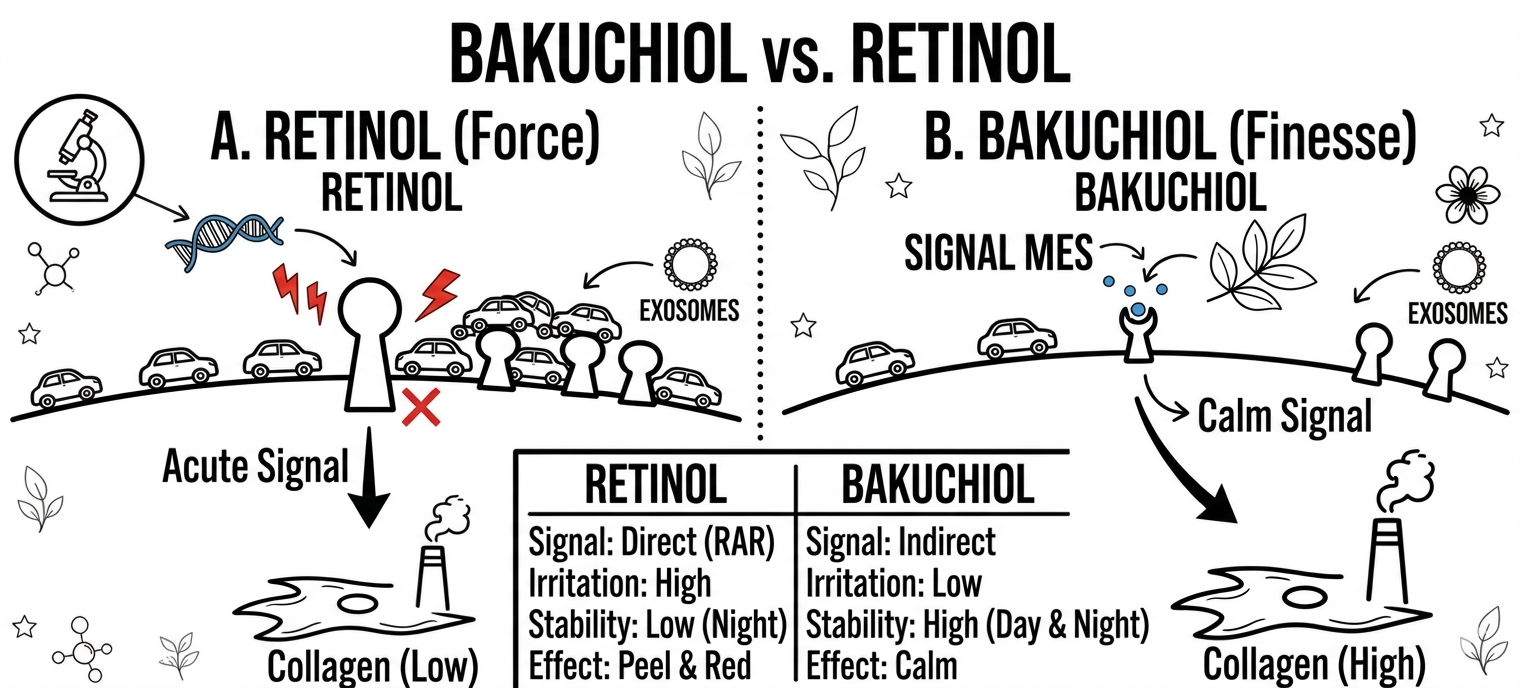
Retinol is the gold standard, but its side effects—redness, peeling, and “Retinoid Dermatitis”—are a major barrier for many. Enter Bakuchiol, the plant-derived powerhouse that claims to offer retinol-like results without the trauma.
As a Bioengineering Ph.D., I wanted to look beyond the “clean beauty” marketing. How can a terpenophenol (Bakuchiol) mimic a vitamin A derivative (Retinol) when their chemical structures are so different? Let’s look at the molecular logistics.
1. Functional Analogy: The “Bio-Isostere” Concept
In drug design, a bio-isostere is a compound that has different chemical structures but produces broadly similar biological effects.
- The Chemical Divergence: Retinol is a diterpene with a cyclohexene ring and a long side chain ending in an alcohol group. Bakuchiol is a meroterpene derived from the Psoralea corylifolia plant. They look nothing alike under a microscope.
- The Biological Convergence: Despite the structural difference, genomic profiling shows that Bakuchiol induces highly similar gene expression in human skin as Retinol. Specifically, both stimulate Type I, III, and IV collagen and decrease the activity of MMPs (matrix metalloproteinases), the enzymes that break down your skin’s structural matrix.
2. Receptor Interaction: Bypassing the “Traffic Jam”
Why does Bakuchiol feel so much “gentler”? It comes down to how they interact with your cellular “docking stations.”
- Retinol’s Direct Impact: Retinol (after converting to Retinoic Acid) binds directly to RAR (Retinoic Acid Receptors). This direct “high-speed” command often overwhelms the cells, leading to inflammation (the “Traffic Jam” I analyzed in my previous post).
- Bakuchiol’s Subtle Signaling: Bakuchiol does not seem to bind to RARs in the same aggressive way. Instead, it appears to modulate similar signaling pathways (like the retinoic acid-like gene expression) more indirectly. It achieves the “End Goal” (collagen production) without triggering the “Inflammatory Alarm” of the RAR system.
3. Photostability: Engineering for Day and Night
One of the biggest engineering flaws of Retinol is its photolability—it breaks down rapidly under UV light.
- Retinol: Must be used at night because UV exposure renders it inactive and can increase skin sensitivity.
- Bakuchiol: It is photostable. In fact, research suggests it might even have antioxidant properties that help stabilize other ingredients. This makes it a “Day & Night” solution, providing 24-hour regenerative signaling without the risk of UV-induced degradation.
The Ph.D. Verdict: Finesse over Force
Is Bakuchiol a “weaker” Retinol? No. It is a structurally different molecule that achieves a similar functional outcome through a more stable and less irritant pathway. If you have sensitive skin or find Retinol too “taxing” on your cellular machinery, Bakuchiol is a masterpiece of natural molecular engineering.
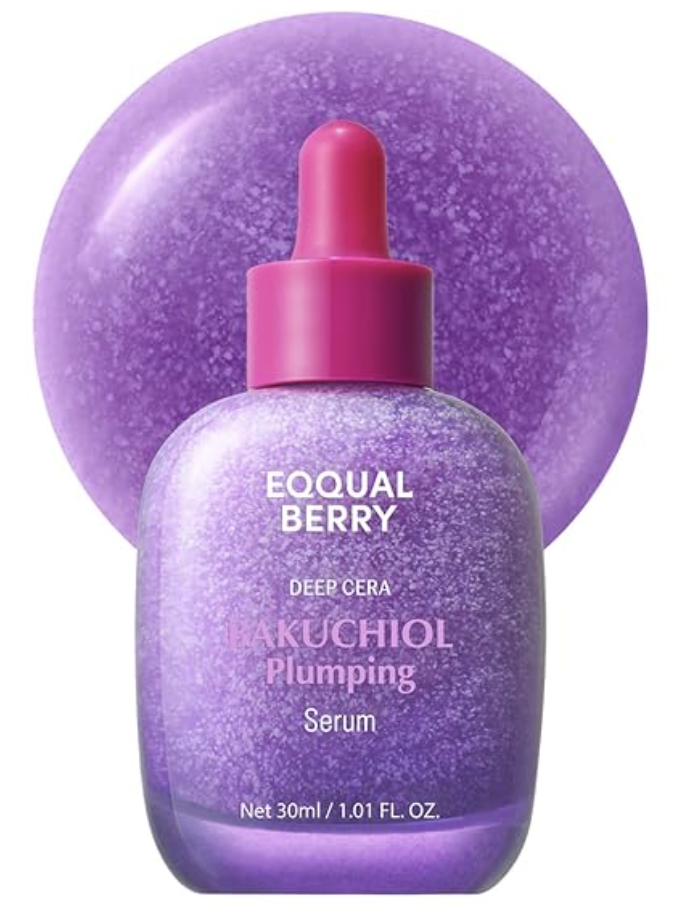
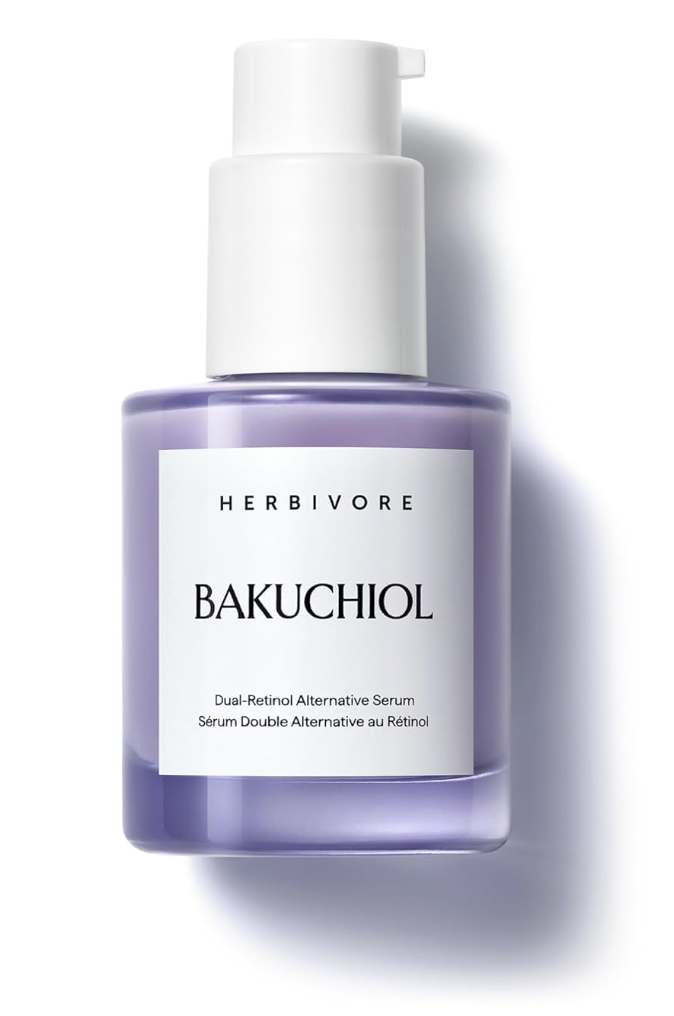
Here are the top-performing retinol products on Amazon. Click to view the latest pricing and customer reviews.
As an Amazon Associate, I earn from qualifying purchases.
Leave a Reply