While many skincare ingredients claim to be “anti-aging,” few have the decades of scientific backing that Retinol (Vitamin A) possesses. Today, we will look at the molecular engineering behind Retinol and why it remains the undisputed king of skin renewal.
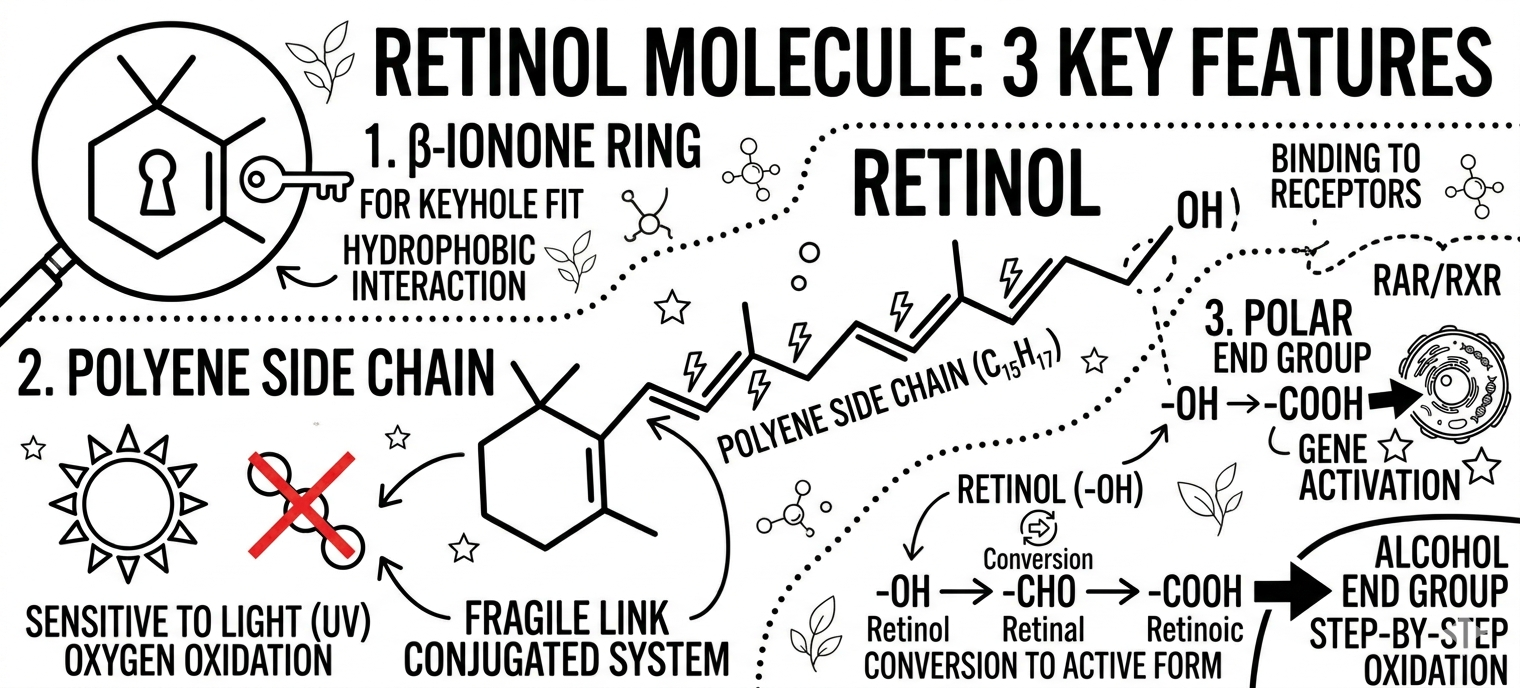
1. The Molecular Design: Polyene Side Chain
The effectiveness of Retinol lies in its unique structure. It features a Polyene side chain with four double bonds that are highly reactive. This specific configuration makes Retinol extremely sensitive to light (UV) and oxygen, which is the precise engineering reason why Retinol products must be stored in opaque containers and applied only at night.
At the tip of this chain sits an Alcohol group (-OH)—the functional “switch” that determines the molecule’s activity and eventual conversion within our skin.
2. The Mechanism: From Retinol to Retinoic Acid
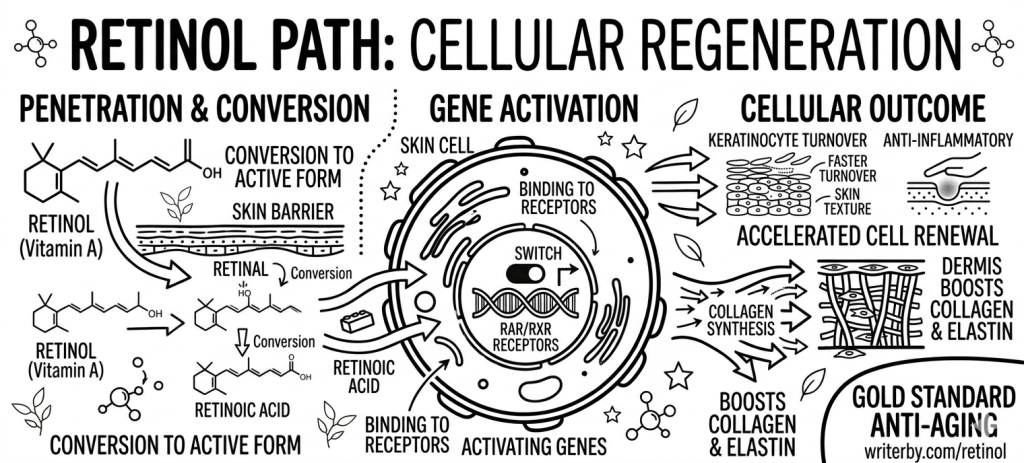
Once Retinol is absorbed into the skin, the alcohol group undergoes oxidation to become Retinoic Acid. Now, it is ready for action.
The beta-ionone ring of the Retinoic Acid binds to receptors within the cell, sending a direct command: “Synthesize Collagen.” As a result, cells accelerate collagen production and stimulate the birth of new cells, effectively regenerating the skin architecture.
Because pure Retinoic Acid is incredibly potent, it is classified as a prescription-only drug (Tretinoin). Therefore, we use Retinol—the safe, pre-active form—in cosmetics, allowing the skin to naturally convert it into the active acid for visible results without extreme irritation.
3. Scientific Evidence: Proven in Vivo
Retinol’s efficacy isn’t just theory; it has been proven through direct application on human skin:
- Epidermal Thickening: Research has shown that applying Retinol induces the expression of retinoid receptors (CRABP II, CRBP mRNA). This leads to increased epidermal thickness and stimulates collagen synthesis within the dermis [1].
- Reversing Natural Aging: In a significant clinical study involving 36 elderly participants (average age 87), the application of 0.4% Retinol for 24 weeks resulted in a meaningful increase in procollagen I levels compared to the control group. The study visually confirmed significant wrinkle improvement, proving that even skin thinned by natural (intrinsic) aging can be structurally restored [2].
Read more about the side effects of retinol.
References
[1] Kang, Sewon, et al. “Application of retinol to human skin in vivo induces epidermal hyperplasia and cellular retinoid binding proteins characteristic of retinoic acid but without measurable retinoic acid levels or irritation.” Journal of Investigative Dermatology 105.4 (1995): 549-556.
[2] Kafi, Reza, et al. “Improvement of naturally aged skin with vitamin A (retinol).” Archives of dermatology 143.5 (2007): 606-612.
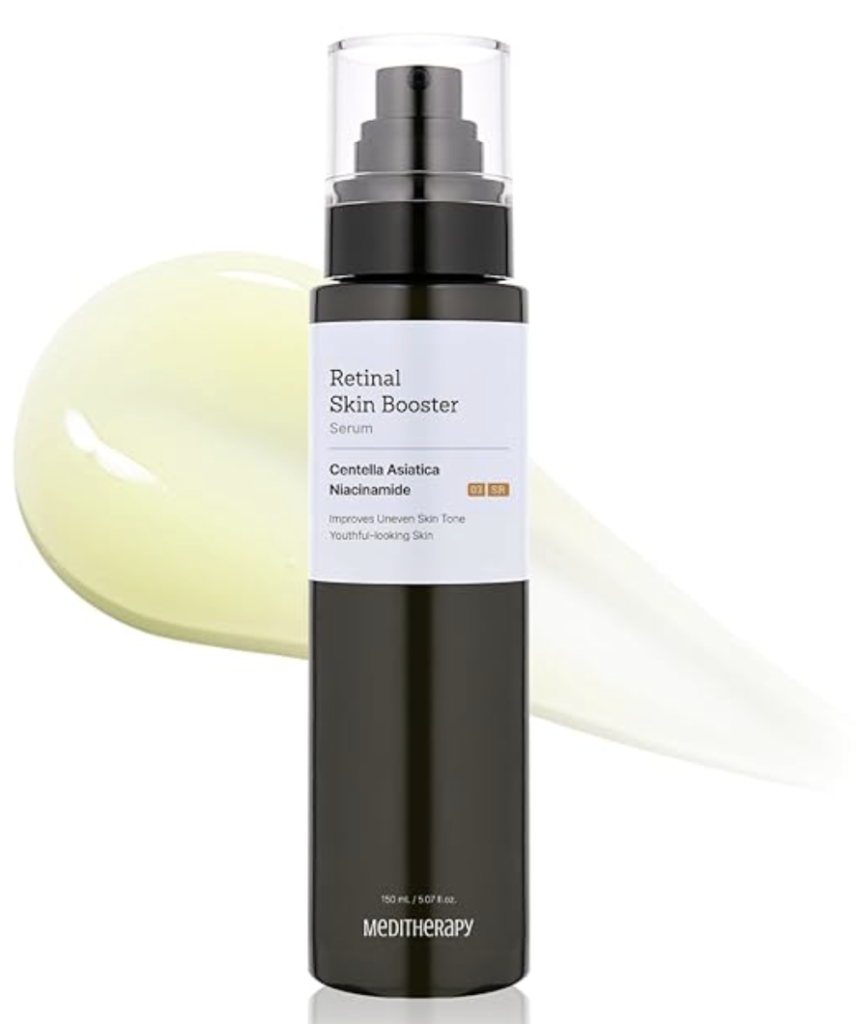
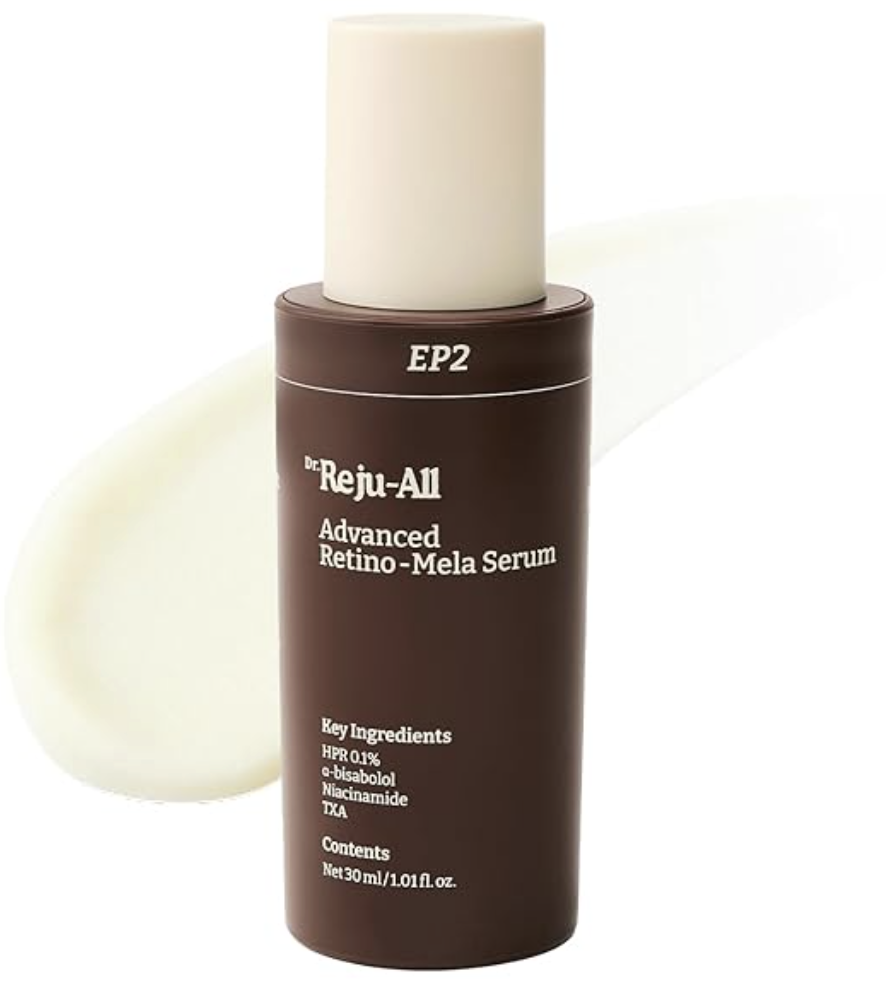
Here are the top-performing retinol products on Amazon. Click to view the latest pricing and customer reviews.
As an Amazon Associate, I earn from qualifying purchases.


Leave a Reply